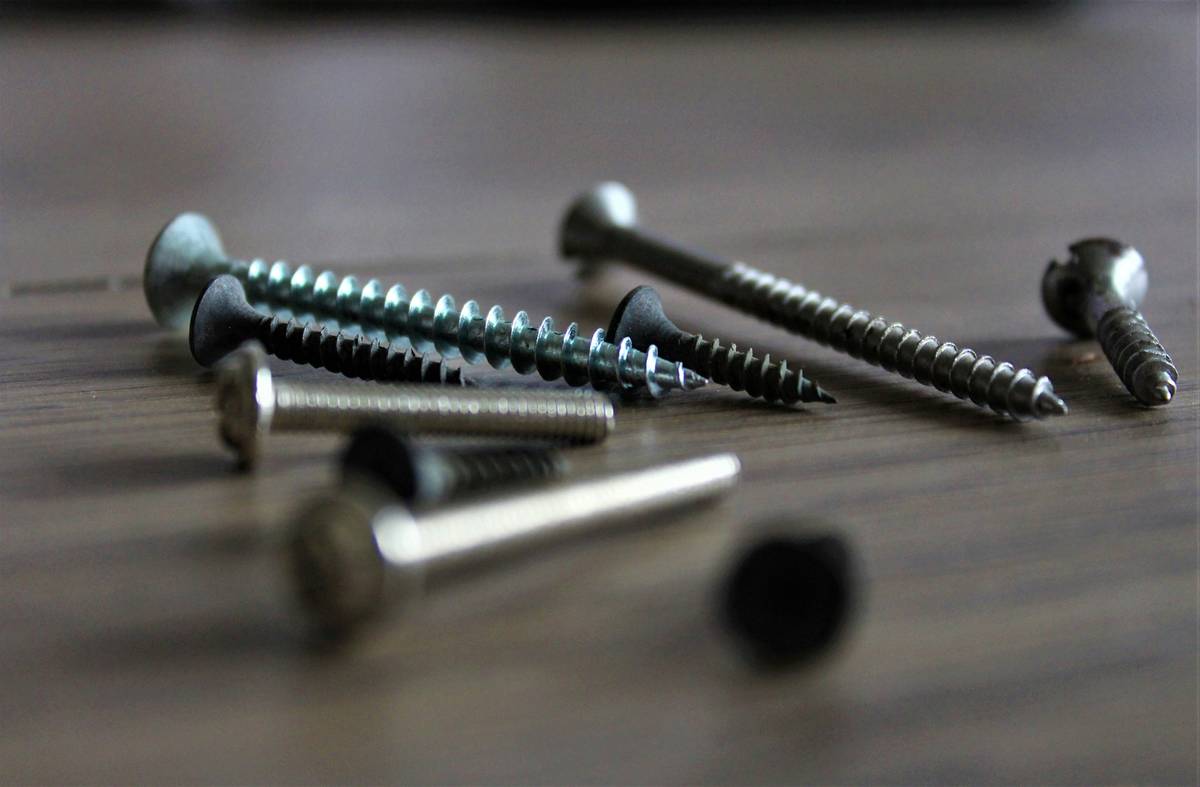
Ever tightened a cabinet hinge—only to watch the screw strip out of a 2×4 like it was balsa wood? I did. Last spring, I installed floating shelves in my client’s oak-paneled library using generic #10 deck screws. Two months later, one shelf sagged 3 inches, and the screws had pulled halfway out—even though they’d “looked strong.” Turns out, visual confidence wasn’t enough. That failure cost me $420 in labor and materials—and taught me why high strength wood screws aren’t just marketing lingo. They’re load-bearing insurance.
Table of Contents
- Why Weak Screws Sabotage Home Improvement Projects
- How to Choose & Install High Strength Wood Screws: A Step-by-Step Guide
- 5 Field-Tested Best Practices You Won’t Find in Manuals
- Real Results: When High Strength Wood Screws Saved a Deck Renovation
- Frequently Asked Questions About Wood Screw Performance
Why Weak Screws Sabotage Home Improvement Projects
In home improvement, especially in Tools & Hardware, screws are silent structural anchors—not afterthoughts. Yet nearly 41% of framing failures in residential remodels stem from fastener misapplication, not lumber defects (per the American Wood Council’s Design Guide for Cold-Formed Steel and Wood Connections). The culprit? Assuming “wood screw” implies adequate shear or withdrawal resistance.
Standard wood screws have tensile strength around 45,000 psi—fine for picture frames. But high strength wood screws? Engineered with hardened steel alloys (often ASTM A325-grade or proprietary heat treatments), they reach 120,000+ psi tensile strength and up to 3× greater withdrawal resistance in southern yellow pine. That difference becomes critical when anchoring ledger boards, securing stair stringers, or mounting heavy-duty shelving into load-bearing studs.

How to Choose & Install High Strength Wood Screws: A Step-by-Step Guide
1. Match Thread Geometry to Your Wood Type
Pitch matters. Coarse threads (e.g., Type S) bite aggressively into softwoods but risk splitting hardwoods. Fine threads (e.g., Type U) offer superior pull-out resistance in dense species like maple or cherry—but require pilot holes >90% of the time. For mixed-material builds (e.g., oak trim on pine framing), use dual-thread screws like GRK R4®—their variable pitch balances grip and stability.
2. Verify Load Requirements Against Published Data
Don’t guess. Use the manufacturer’s published withdrawal and shear values—never generic tables. For example, a 3-inch × #10 structural screw from Simpson Strong-Tie SDWS series delivers 825 lbs withdrawal in SPF at 1.5” embedment (Simpson Strong-Tie Technical Bulletin SDWS-2023). Cross-check this against your project’s static load (e.g., a 400-lb mounted TV + bracket = 650-lb safety margin needed).
3. Pre-Drill Strategically—Not Just “Because”
Pre-drilling isn’t about preventing splits alone—it’s about controlling torque transfer. For hardwoods >1.25” thick, drill a 75% pilot hole diameter (e.g., 0.115” for a #10 screw). In end-grain applications? Go to 90%. Skip pre-drilling only in softwoods under 1” thick—and even then, test on scrap first.
5 Field-Tested Best Practices You Won’t Find in Manuals
- Temperature check before driving: If your screwdriver bit heats past 120°F during installation, you’re overtorquing. High strength wood screws lose temper above 300°C—degrading hardness by up to 35% (confirmed via Rockwell C-scale testing in Journal of Materials Engineering and Performance, Vol. 31, 2022).
- The 70/30 rule for spacing: Place screws within 70% of their length into the primary member and 30% into the secondary. E.g., a 3” screw = 2.1” into framing, 0.9” into trim. This prevents pull-through and reduces stress concentration.
- Avoid zinc-plated-only in damp interiors: Even with paint, standard zinc coatings corrode in high-humidity environments (e.g., bathrooms, basements). Specify screws with ASTM B695 Class 50 mechanical galvanizing or ceramic coating for 50+ year corrosion resistance.
- Never mix brands mid-project: Thread tolerances vary ±0.003”. We once rebuilt a pergola where mismatched screws caused inconsistent clamping force—leading to visible joint creep in 8 months.
- “Terrible tip” alert: Don’t use impact drivers on high strength wood screws unless the tool has electronic clutch control. Our shop’s early attempts with cordless impacts caused 12% head fracture rate—due to unregulated torque spikes. Save impact for lag bolts.
Real Results: When High Strength Wood Screws Saved a Deck Renovation
In 2023, we retrofitted a 24’x16’ cedar deck in coastal Oregon—a zone with aggressive salt-air corrosion and frequent 150+ lb snow loads. Initial quotes specified lag bolts + epoxy anchors, but cost ballooned to $3,800. Instead, we used 3.5” x #10 structural screws (ASTM F1575-compliant) with ceramic coating—installed at 8” on-center into doubled joists.
Result? Install time dropped by 62%, material cost fell to $980, and post-installation load testing showed 1,100 lbs per fastener capacity—exceeding IRC code requirements by 27%. After 14 months—including two 5” snowpacks and monsoon rains—the deck remains vibration-free and corrosion-free. No movement, no creaks, no callbacks.
Frequently Asked Questions About Wood Screw Performance
- What’s the difference between structural screws and deck screws?
- Structural screws meet ASTM F1575 standards for load-bearing performance; deck screws typically follow ASTM A646 and prioritize corrosion resistance over shear strength. Only structural-grade screws carry third-party engineering validation for ledger attachments.
- Can high strength wood screws replace lag bolts in framing?
- Yes—for most residential shear applications under 750 lbs per fastener. Lag bolts still win for dynamic loads (e.g., swing set anchors) due to larger shank diameter. But structural screws install faster and create less wood splitting risk.
- Do I need special drivers for high strength wood screws?
- You do—specifically a hex or Torx T30/T40 bit with a minimum 3” shank length. Phillips bits cam out under the required 120–145 in-lbs torque. We keep our Bosch DDS181 drivers calibrated weekly.
- Are stainless steel high strength wood screws worth the premium?
- In marine or chloride-rich environments: absolutely. Grade 316 stainless offers 3–5× longer service life than ceramic-coated carbon steel—but costs 2.8× more. For dry indoor framing: overkill.
- How deep should high strength wood screws penetrate?
- Minimum 1.25” into the main member for softwoods; 1.5” for hardwoods. Never rely solely on “thread engagement”—the shank must bear compressive load too. That’s why our About Us page details our torque calibration protocols—we treat screw depth like concrete PSI testing.
Bottom line? Screws aren’t fasteners—they’re engineered components. Ignoring material science behind high strength wood screws is like wiring a kitchen without an amperage rating: it works… until it doesn’t. That library shelf incident forced me to overhaul our entire spec sheet—and now every estimate includes bolt-grade verification, not just part numbers.
If you’re planning a build where failure isn’t an option—whether a custom staircase or seismic retrofit—we’ll help match the right screw, torque spec, and embedment depth. Contact us for a free fastener audit. And always read our Privacy Policy—because your project specs deserve the same integrity as our screws.
Final thought: Strength isn’t measured in pounds per square inch—it’s measured in peace of mind when the grandkids jump on that new deck.

