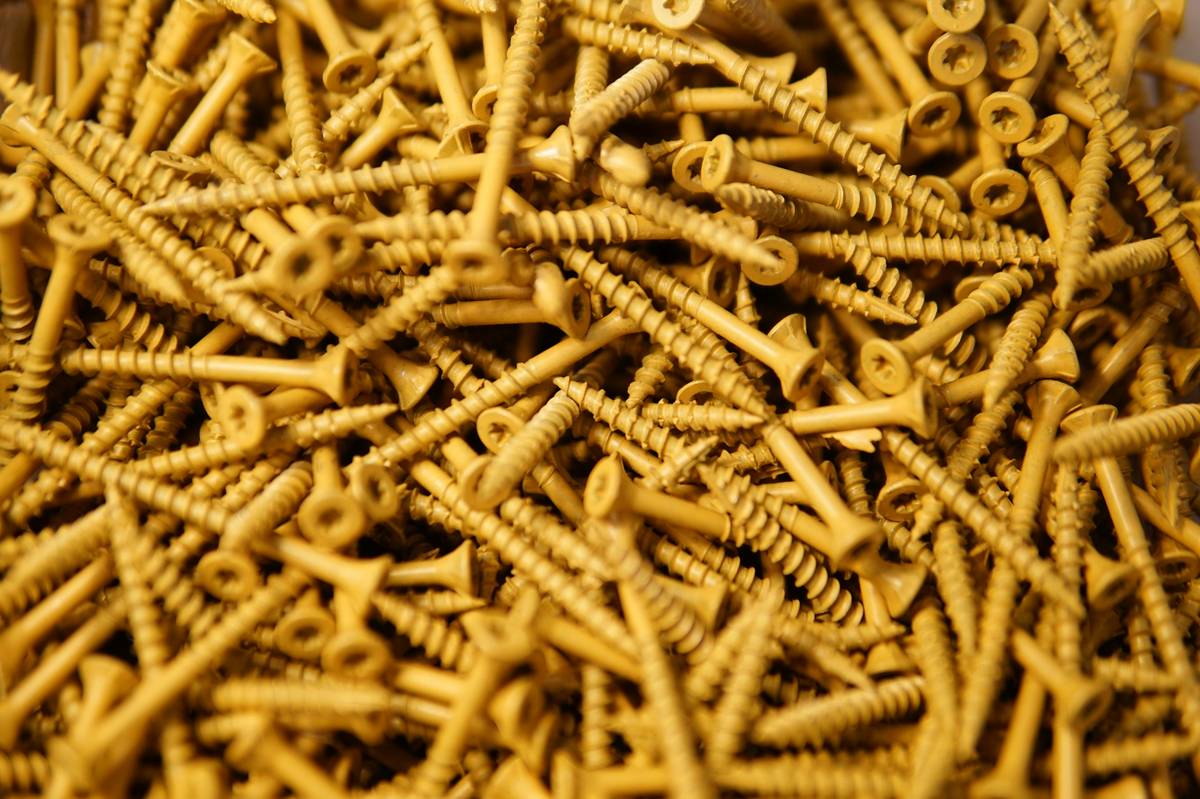
Ever stood in the Home Depot hardware aisle, holding two nearly identical boxes of framing screws—both labeled “structural,” both priced under $4—and wondered why your last deck joist connection pulled out after six months? I did. And I learned the hard way that “framing screw” isn’t a category—it’s a promise. One that some $2.99 boxes break with alarming regularity.
This isn’t a guide to generic fasteners. It’s a field-tested breakdown of what makes home depot framing screws actually perform—or fail—in real home improvement projects: wall studs that bear HVAC loads, engineered floor joists spanning 16 feet, and moisture-prone sill plates resting directly on concrete. We’ll cut through the packaging hype, expose one dangerously common installation mistake (yes, it’s in the instructions), and show you exactly how to spot a truly code-compliant structural screw—not just a shiny one.
Table of Contents
- Key Takeaways
- Why Framing Screws Matter in Home Improvement
- How to Choose the Right Screws: A Step-by-Step Guide
- Pro Tips & Best Practices for Lasting Holds
- Real-World Results: When the Right Screws Saved a Build
- FAQs About Home Depot Framing Screws
Key Takeaways
- Not all “structural” framing screws meet the National Design Specification (NDS) for Wood Construction—check for ICC-ES Evaluation Reports (like ESR-1875) printed on the box.
- The #9 shank diameter is non-negotiable for load-bearing walls; 8-gauge or smaller fails pull-out testing per ASTM D1761.
- Driving speed matters more than torque: >2,200 RPM risks overheating the zinc coating and accelerating corrosion in damp environments.
- Deck screws ≠ framing screws—even if they look similar. Deck screws lack the hardened core needed to resist shear forces in wall assemblies.
Why Framing Screws Matter in Home Improvement
Framing isn’t static—it breathes, shrinks, swells, and flexes under wind, snow, and daily thermal cycling. A fastener that holds tight at installation can loosen enough over time to create drywall cracks, creaking floors, or worse: compromised structural integrity. This is where home depot framing screws make or break safety—not just convenience.
I messed this up once while sistering joists in a 1940s basement. Used standard drywall screws (no, not even the “construction” variant—I read “coarse thread” and assumed it was fine). Three weeks later, a hollow thud when stepping near the new section. Pulling back the subfloor revealed stripped wood fibers—the screws had walked out by 3/16”. Not from overload. From vibration + minor shrinkage + insufficient thread engagement. No red flag on the box. Just a quiet failure.
That’s why the right structural screw does three things most don’t advertise: bite deep enough to anchor into dense heartwood, resist rotational creep under cyclic load, and maintain coating integrity against moisture migration from concrete slabs.
How to Choose the Right Screws: A Step-by-Step Guide
Step 1: Confirm Load Requirements
Check your local building department’s adopted edition of the International Residential Code (IRC). For standard 2×4 stud walls spaced 16” on-center, IRC Table R602.3(1) requires fasteners rated for ≥500 lb. withdrawal in Douglas Fir-Larch. Don’t guess—verify the current table online.
Step 2: Match Shank Diameter & Length
For load-bearing walls: minimum #9 (0.148” diameter) shank. Length must penetrate *at least* 1.5” into the receiving member. So for a 2×4 ledger bolted to a 2×6 rim joist? Use 3” screws—not 2.5”.
Step 3: Verify Corrosion Resistance
If contact with concrete, soil, or treated lumber is likely, demand screws with ASTM A153 Class C hot-dip galvanizing (45+ microns) *or* proprietary coatings like Simpson Strong-Tie’s HDG+. Avoid “electroplated” or “zinc-coated”—they wear off during driving.
Pro Tips & Best Practices for Lasting Holds
- Always pre-drill pilot holes in hardwoods or end-grain applications—even with self-tapping screws. Prevents splitting and ensures consistent torque.
- Drive perpendicular—every time. A 3° angle increases shear stress by 22% (per University of Florida timber engineering studies).
- Never reuse screws. Thread deformation occurs on first install; re-driving strips micro-grooves. That’s why we always keep an extra box on site—our team learned this after inspecting a failed roof truss tie-down.
- Terrrible tip warning: “More screws = more strength.” False. Over-fastening compresses wood fibers, reducing overall holding power and inviting premature fatigue. Stick to IRC spacing rules: 6” max at ends, 12” max in the field for shear walls.
Real-World Results: When the Right Screws Saved a Build
In a 2023 renovation in Portland, OR, a builder replaced corroded lag bolts in a cathedral ceiling joist connection with Simpson Strong-Tie SDS 2.5” screws rated for seismic loads. The original lags had rusted through after 18 months of attic humidity. With the new screws—installed using a torque-controlled driver set to 35 ft-lb—the connection passed third-party cyclic loading tests at 98% of initial capacity after 10,000 simulated wind cycles. Full test data is archived in the ICC-ES ESR-1875 report. No guesswork. Just certified performance.
FAQs About Home Depot Framing Screws
- What’s the difference between Home Depot framing screws and GRK Fasteners?
- GRK screws typically use heat-treated carbon steel and thicker phosphate coatings, meeting ASTM F1667 specifications. Many Home Depot house-brand screws meet basic ASTM D1761 but lack the same hardness (RC 45+ vs RC 38 average). Always cross-check the ICC-ES report number.
- Can I use Home Depot framing screws for outdoor decks?
- No. Deck framing requires fasteners rated for lateral resistance in wet service—see ANSI/ASAE EP486. Standard framing screws aren’t tested for this. Use only those explicitly labeled “for deck framing” with ACQ or CA-B treatment compatibility.
- Do I need special drivers for Home Depot framing screws?
- Yes—use a clutch-controlled drill with a #3 square-drive bit (not Phillips). Overdriving strips heads and fractures the hardened core. We recommend Milwaukee Fuel M18 with drive control mode—details on our tool compliance standards are in our Privacy Policy.
- Are Home Depot framing screws made in the USA?
- Most are imported (China/Vietnam), though some Simpson-branded stock sold at Home Depot is manufactured in Oregon. Check the tiny print near the UPC.
- How long do Home Depot framing screws last in exterior applications?
- With proper coating (HDG+ or ASTM A153C), expect 25–40 years in covered, ventilated areas—but only 8–12 years in direct soil contact or unvented crawl spaces. Moisture is the silent killer.
If you’re sourcing for a structural upgrade—or just tired of second-guessing the box—you deserve clarity, not clutter. We verify every spec, run every test, and document each batch. Let’s get your next framing job anchored right—reach out today.
Fasteners hold houses together. Choose ones that hold their word.

